
Training is the stimulus. Recovery is where the adaptation actually happens: muscle rebuilt stronger, energy stores refilled, the nervous system settling. You can have perfect form, ideal programming, and flawless progression, and still make near-zero progress if you under-eat protein and sleep five hours a night. This guide expands the recovery chapters of our Complete Guide to Resistance Training Machines into a complete nutrition-and-recovery playbook: what to eat, how much, and how to know when your body is actually keeping up with your training.
This article contains Amazon affiliate links. As an Amazon Associate, we earn from qualifying purchases.
Nutrition and Recovery in Brief
Short on time? Here’s the whole article in six lines.
- Protein: roughly 1.6 to 2.2 g per kg of body weight daily, spread across 3 to 5 meals.
- Calories: a small surplus to build muscle, a modest deficit to lose fat, maintenance to recomp slowly.
- Carbs: your main training fuel; eat some before and after hard sessions.
- Sleep: 7 to 9 hours most nights, the single most powerful recovery tool you have.
- Rest days: 48-plus hours between hard sessions for the same muscles; light movement beats total inactivity.
- Watch the signals: falling performance, poor sleep, and persistent joint pain all mean pull back, not push harder.
The Big Picture: Stimulus, Resources, Adaptation
It helps to think of progress as an equation rather than a single input:
Effective training stimulus (from your programming and progressive overload) + adequate protein and calories (resources) + sufficient sleep and rest (rebuilding time) = progress
Weakness in any term caps the whole equation, no matter how strong the others are. A perfectly programmed session on five hours of sleep and a skipped dinner produces a fraction of the adaptation it should. Most stalled lifters don’t need a new program; they need to close the resource gap between what their training demands and what their diet and sleep are actually supplying.
Protein: The Single Most Important Number
Muscle is made of protein, and resistance training increases your body’s demand for it, both to repair the microscopic damage from hard sets and to build new contractile tissue on top of what’s already there. The evidence-supported target for people doing resistance training is roughly 1.6 to 2.2 grams per kilogram of body weight per day.

Practical Translation
- 60 kg person: approximately 95 to 130 g/day
- 75 kg person: approximately 120 to 165 g/day
- 90 kg person: approximately 145 to 200 g/day
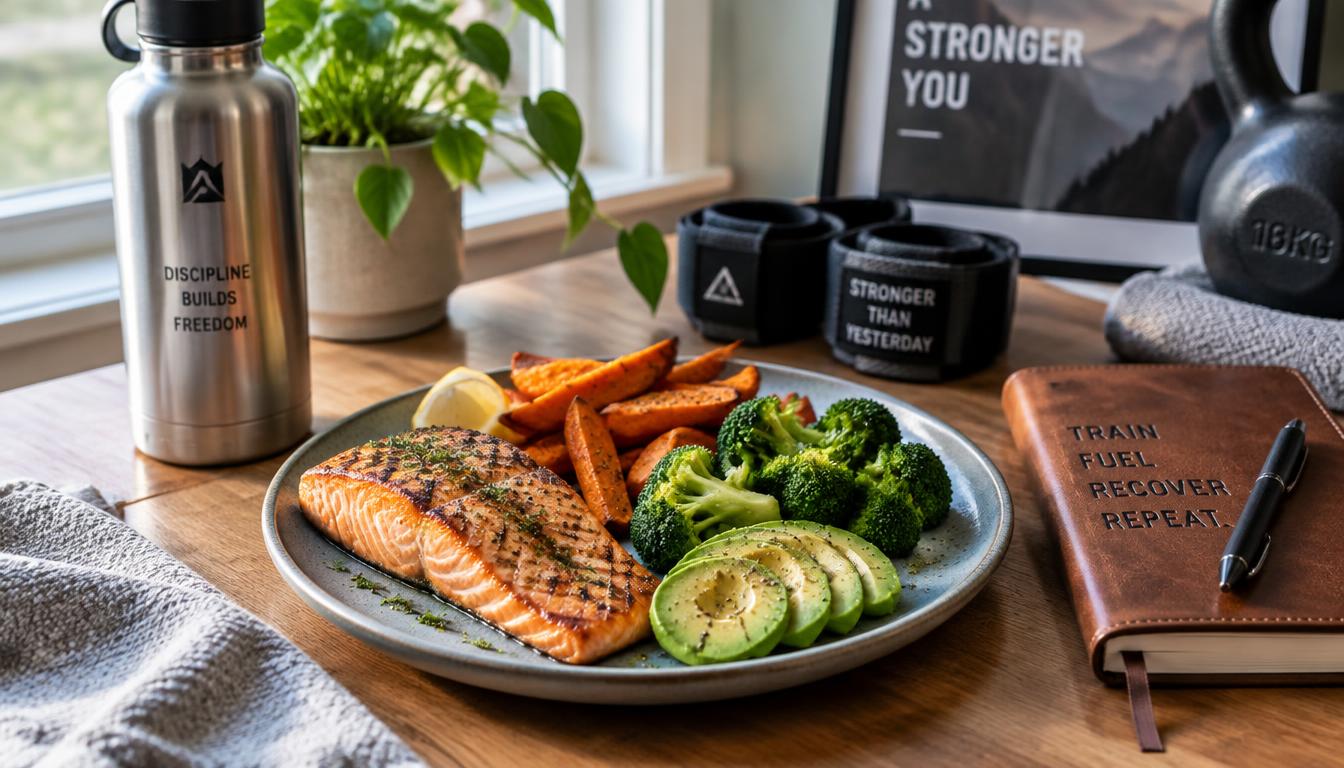
Spread that total across 3 to 5 meals, roughly 25 to 45 g per meal for most people, rather than one giant dinner. Your body can only use so much protein for muscle repair in a single sitting, so distributing intake throughout the day gives you more opportunities to actually put it to work. Quality sources include chicken, fish, eggs, dairy such as Greek yogurt and cottage cheese, lean meats, tofu, tempeh, legumes, and protein powder where convenient. If your schedule makes whole-food protein hard to hit consistently, a whey protein powder or a plant-based protein powder closes the gap without much effort, and a simple kitchen scale makes portioning meals far more accurate than eyeballing it.
Key detail: the lower end of the range is sufficient for most people most of the time; the higher end is useful during aggressive fat loss or very high training volumes, when your body needs extra protein to help preserve muscle. More protein than this adds little on its own; total daily intake matters far more than the exact timing of when you eat it.
Calories: Match the Goal
- Build muscle: a small surplus, roughly 200 to 300 kcal above maintenance, maximizes growth while limiting fat gain. Bigger surpluses mostly build fat faster, not muscle faster.
- Lose fat: a modest deficit, roughly 300 to 500 kcal below maintenance, combined with high protein and continued hard training. This combination preserves muscle while fat comes off, which is the entire point of continuing to train during a cut.
- Maintain or recomp: eat around maintenance and let slow body recomposition happen over months, not weeks.
Your scale weight, gym performance, and how your clothes fit together tell you if the calorie level is right, far more reliably than any single one alone. If performance is declining for weeks during a deficit, that’s a signal the deficit is too aggressive or protein is too low, not a sign to simply push harder through it.
Carbohydrates: Fuel for the Work
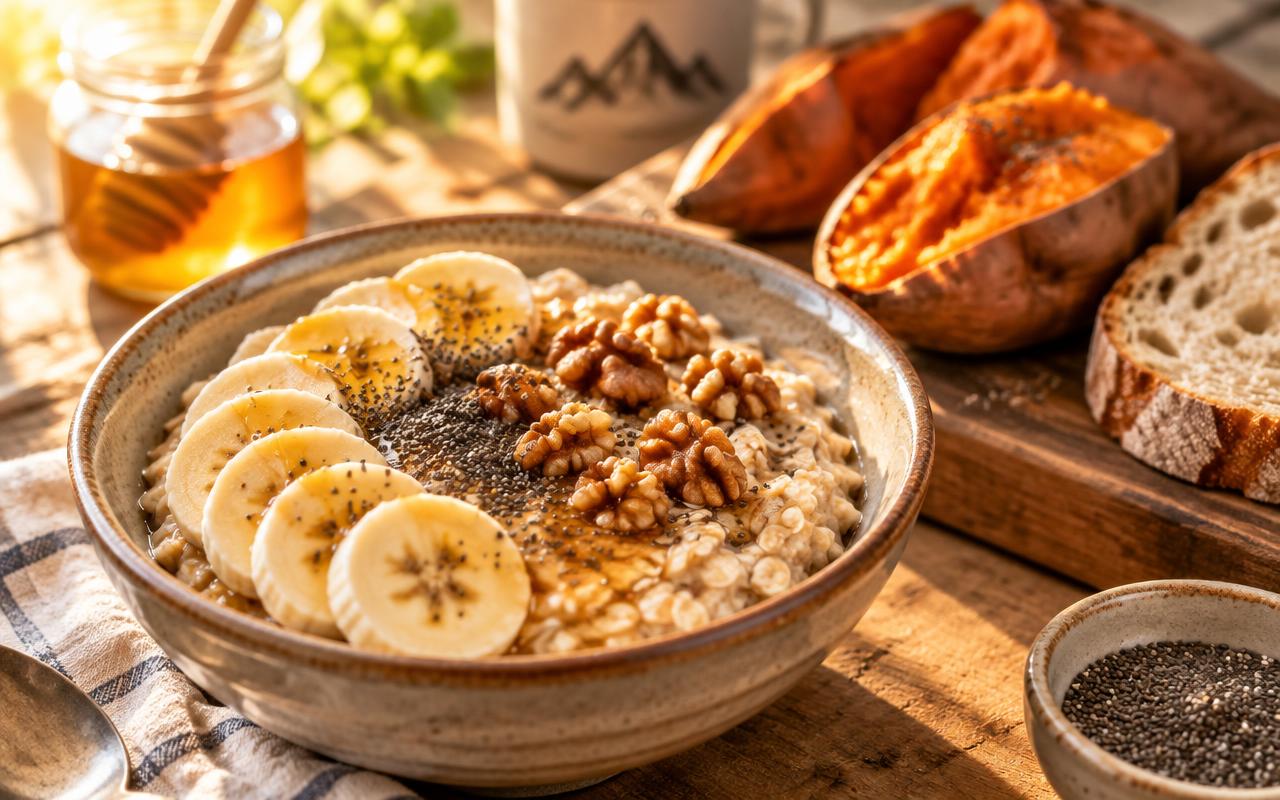
Carbs are the primary fuel your muscles pull from during hard sets, stored as glycogen and burned rapidly during resistance training. Running low on glycogen is one of the quiet reasons a session can feel flat even when sleep and motivation are fine. Practical guidelines:
- Include a carbohydrate-based meal 1 to 3 hours before training when possible, such as oats, rice, fruit, or bread.
- Include carbs and protein after training. The so-called “anabolic window” is wider than marketing suggests, often several hours, but post-session meals still make sense as a natural part of your daily rhythm.
- Don’t fear carbs around training in pursuit of a deficit. Performance preservation during hard sets is what actually keeps the muscle you’re trying to protect.
Hydration
Even mild dehydration measurably reduces strength and focus, sometimes before you’d consciously notice you’re thirsty. Rough targets: approximately 30 to 40 ml per kilogram of body weight daily, more on hot days or particularly sweaty sessions. Water is the default choice for most training; electrolytes matter mainly for very long or very sweaty sessions where you’re losing meaningful sodium through sweat. If your urine is consistently dark through the day, that’s a simple, reliable sign to drink more. A marked water bottle that tracks your intake across the day removes the guesswork for people who tend to forget to drink until they’re already behind.
Sleep: The Most Powerful Recovery Tool That Costs Nothing

7 to 9 hours, most nights. Sleep is when growth hormone peaks, when protein synthesis runs hottest, and when the nervous system consolidates the day’s training into actual adaptation. Chronic short sleep doesn’t just slow recovery; it blunts muscle-building signaling directly, worsens appetite regulation in ways that make overeating more likely, and degrades technique, since tired lifters lose positions more easily: backs arch, knees cave, and the “governor” of good form gets harder to maintain.
Practical levers that make the biggest difference: consistent sleep and wake times even on weekends, a cool dark room, screens off 30 to 60 minutes before bed, caffeine cut off 8-plus hours before sleep, and treating bedtime as a training appointment you don’t skip. If light or noise is the barrier in your space, a simple sleep mask or white noise machine can make a meaningful difference in how consistently you actually get those hours.
Rest Days and Active Recovery

The pillar guide recommends 48-plus hours between hard sessions for the same muscle groups, giving the specific tissue you trained time to actually rebuild before you load it hard again. Between sessions, light activity beats total inactivity: walking, easy cycling, or gentle mobility work all increase blood flow, reduce soreness, and aid nutrient delivery to recovering muscle without adding meaningful fatigue on top of it. Hard cardio on rest days is not recovery; count it as training, since it draws on the same resource pool as your lifting sessions.
Soreness: What It Means, and What It Doesn’t
Delayed-onset muscle soreness, commonly called DOMS, is common when starting out or after new exercises, and it fades as your body adapts to that specific stimulus. A few important truths worth internalizing:
- Soreness is not a progress meter. You can grow without being sore, and you can be sore without having grown much at all.
- Never train a severely sore muscle hard. Light movement helps circulation and recovery; heavy loading a sore muscle mostly delays recovery further.
- Persistent soreness with declining performance signals under-recovery. The fix is to eat more, sleep more, and reduce volume for a week, not to grind through it.
Recovery Signals to Monitor: The Dashboard
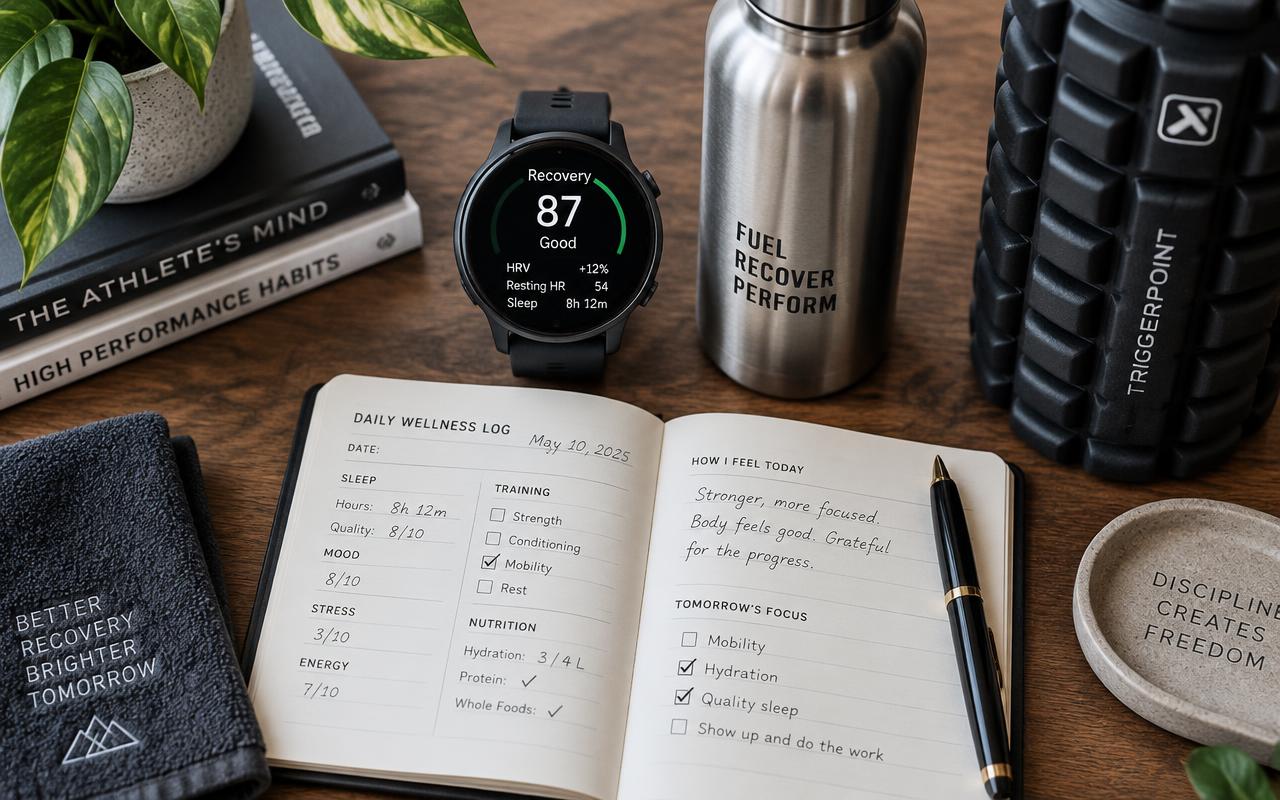
These signals tell you when to push and when to pull back, well before a small dip becomes a real setback:
- Performance: weights or reps trending down across 1 to 2 weeks means fatigue is outpacing recovery.
- Sleep quality: falling asleep instantly and waking unrested, or feeling wired-but-tired, points to under-recovery.
- Mood and motivation: unusual irritability or dreading sessions you normally enjoy is another under-recovery signal.
- Persistent joint pain: aching knees, shoulders, or elbows that doesn’t settle between sessions means reduce volume, double-check your setup and technique, and seek professional advice if it persists.
- Resting heart rate or HRV, optional: an elevated morning heart rate sustained over a week is a classic overreaching signal worth paying attention to. A basic fitness tracker makes this easy to monitor passively without adding another task to your morning.
The correct response to any of these signals is to reduce intensity or volume for a week, commonly called a deload, not to push harder through it. Training through warning signs is how four-week stalls become four-month injuries.
Supplements: Useful, Optional, Secondary
A short, honest list, in rough order of how much evidence and value each one actually offers:
- Creatine monohydrate (3 to 5 g/day): the most evidence-supported supplement for strength and muscle. Safe for healthy individuals, and inexpensive. Expect 1 to 2 kg of water-weight gain initially; that’s stored in muscle tissue and working for you, not a sign of fat gain. Plain creatine monohydrate powder is the well-studied form worth looking for.
- Protein powder: essentially food in powder form. Convenient for hitting daily targets consistently, but not magic on its own; it only matters in the context of your total daily intake.
- Vitamin D: sensible if blood tests show a deficiency, which is common in winter or at low-sun latitudes.
- Caffeine: a genuine performance aid pre-training for most people; keep late-day doses away from your sleep window given how long it stays in your system.
- Everything else: fish oil, magnesium, and similar supplements are situational and lower-priority. Sort food and sleep first; supplements are the last 5 percent, not the first.
Consult a healthcare professional before starting any supplement regimen, especially if you have medical conditions or take medications. As the pillar guide notes, supplements complement a balanced diet; they do not replace it.
A Sample Training Day, Fully Recovered
| Time | Action |
|---|---|
| Morning | Wake consistently; protein-rich breakfast, for example eggs and oats |
| Pre-training (1 to 3 h) | Carb and protein meal; hydrate |
| Session | Train per your program; log everything |
| Post-training (within ~3 h) | Protein (25 to 45 g) plus carbs and fluids |
| Evening | Balanced dinner; screens off early |
| Night | 7 to 9 hours of sleep, the real workout |
Frequently Asked Questions
Do I really need to hit my protein target every single day?
Not with rigid precision. What matters is the weekly average staying in range; a day or two slightly under target is not a problem as long as most days land close to your number. Chronic, consistent under-eating over weeks is what actually caps recovery.
Should I eat differently on rest days versus training days?
Keep protein consistent every day, since muscle repair continues on rest days too. Carbs can trend slightly lower on rest days if you’re managing calories closely, but the difference matters far less than most people assume.
Is it possible to build muscle in a calorie deficit?
It’s possible for beginners, people returning after time off, or those with meaningfully higher body fat, though it’s slower and less reliable than in a surplus. For most experienced lifters at a lean bodyweight, a deficit is better used to preserve existing muscle while losing fat rather than to build new muscle.
How much does nutrient timing actually matter compared to total intake?
Far less than total daily intake. Hitting your protein, calorie, and carbohydrate targets across the day matters enormously; whether you eat protein 30 minutes or 3 hours after training matters comparatively little for most people.
What’s the single highest-leverage change most people should make first?
For the majority of lifters who feel stuck, sleep and protein intake are the two most commonly neglected variables, and fixing either one tends to produce a noticeable difference within a couple of weeks, often before any change to the training program itself.
The Takeaway
Train hard with good form, then take recovery as seriously as the workout itself: 1.6 to 2.2 g/kg protein daily, calories matched to your goal, carbs around sessions, fluids through the day, 7 to 9 hours of sleep, light movement on rest days, and honest attention to the signals your body is sending. Do that consistently, and the results you’re chasing in the gym finally have room to arrive.
Return to the Complete Guide to Resistance Training Machines for the full cluster of technique, programming, and recovery articles, or browse more guides on the Fit4Fundz blog.
This article is for general education and isn’t medical advice. If you have a health condition, are pregnant or nursing, or take medication, check with a doctor or registered dietitian before making significant changes to your diet or supplement routine.