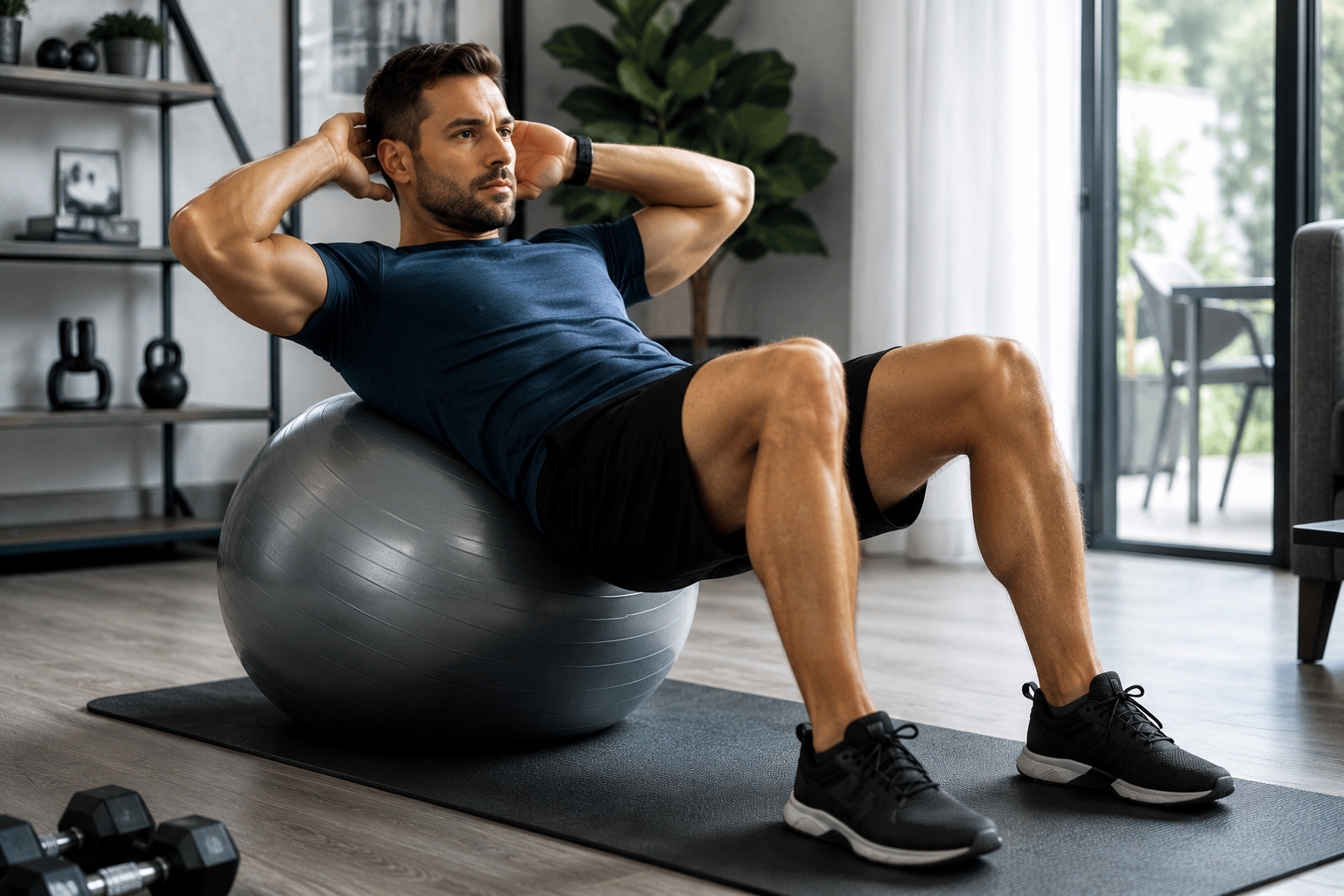
1. Introduction to Fitness Balls
Fitness balls, also known as exercise balls, stability balls, or Swiss balls, are versatile training tools that have become essential in modern fitness routines. Originally developed for physical therapy, these inflatable balls now play a crucial role in strength training, rehabilitation, balance work, and core development.
The unstable surface of fitness balls requires your body to engage stabilizing muscles throughout your core, back, and limbs, creating a more comprehensive workout than traditional exercises performed on stable surfaces.
What Makes Fitness Balls Unique?
Unlike conventional exercise equipment, fitness balls introduce an element of instability that forces your body to constantly adjust and maintain balance. This activates more muscle fibers, particularly in your core stabilizer muscles, which are often neglected in traditional workouts.
2. Benefits of Using Fitness Balls
Incorporating fitness balls into your workout routine offers numerous physical and functional benefits:
Enhanced Core Strength
The unstable surface forces constant engagement of your core muscles, leading to improved strength in your abdominals and lower back.
Improved Balance
Regular use develops proprioception and improves your ability to maintain balance during dynamic movements.
Better Posture
Strengthening stabilizer muscles supports proper spinal alignment, reducing back pain and improving overall posture.
Joint-Friendly
Many exercises are low-impact, making fitness balls suitable for rehabilitation and individuals with joint concerns.
3. Types of Fitness Balls
Stability Ball (Swiss Ball)
Core strengthening & balance training
The most common type, used for core exercises, balance training, and rehabilitation. Available in various sizes and often made from burst-resistant PVC.
- Core strengthening exercises
- Balance and stability training
- Physical therapy and rehabilitation
Medicine Ball
Strength, power & functional training
Weighted balls used for strength training, explosive movements, and functional exercises. Unlike stability balls, they're not inflated.
- Power and explosive training
- Functional movement patterns
- Core strengthening with resistance
4. Deep-Dive Training Guides
Explore our specialized guides to master every aspect of fitness ball training, from selection to advanced routines.
Finding Your Perfect Size
Don't guess your ball size. Learn the 90-90 rule and use our height-based chart to ensure your ball matches your biomechanics.
Read Size GuideCorrect Inflation Guide
Most "wrong size" issues are actually inflation problems. Learn the 24-hour stretch rule and the wall-measuring method.
Inflation StepsBeginner Foundations
New to the ball? Start with these 12 low-impact moves and follow our 4-week progression plan to build confidence.
Beginner PlanCore Workout: 10 Moves
Ready for a challenge? This routine uses EMG data to target your deep abs and obliques with progressive difficulty.
View WorkoutRelief for Back Pain
Decompress your spine and strengthen postural muscles with our 8-move daily routine backed by spinal load data.
Back Pain GuideOffice Active Sitting
Swap your chair for a ball. Learn the correct desk setup, calorie burn data, and how to transition without fatigue.
Office ProtocolPregnancy & Labor
A must-read for expectant mothers. Sizing for pregnancy, trimester-safe moves, and effective labor positions.
Pregnancy GuideBall vs. Weight Bench
Which one should you buy? We compare force output, stabilizer recruitment, cost, and safety in a data-led breakdown.
Compare Tools5. Quick Sizing Reference
While our detailed size guide is more comprehensive, here is the standard height-based chart for quick reference:
| Your Height | Recommended Ball Size |
|---|---|
| Under 5'2" (157cm) | 45 cm |
| 5'3" - 5'8" (160-172cm) | 55 cm |
| 5'9" - 6'2" (175-188cm) | 65 cm |
| Over 6'3" (190cm) | 75 cm |
Sizing Tip
If you are between sizes or using the ball primarily as a desk chair, we usually recommend sizing up to ensure your hips stay level with or slightly above your knees.
6. Sample Exercises

Wall Squat
Place ball between your lower back and a wall. Lower into a squat while the ball rolls with you.

Plank on Ball
Place forearms on the ball and hold a plank position. Keep your core tight and body straight.
For more detailed routines, see our Beginner Plan or Advanced Core Workout.
7. Safety Guidelines
Critical Safety Rules
- Never over-inflate: Follow manufacturer's pressure guidelines.
- Check weight limits: Don't exceed the ball's maximum capacity.
- Inspect regularly: Look for cracks, punctures, or excessive wear.
- Use on appropriate surface: Non-slip, free of sharp objects.
8. Maintenance & Care
Cleaning
Wipe with mild soap solution and damp cloth. Dry thoroughly before storage. Avoid harsh chemicals.
Inspection
Check for cracks, punctures, and seam integrity before each use. Replace if damaged.
9. Conclusion
Fitness balls are transformative tools for core strength, balance, and posture. By mastering the basics and progressing through our specialized guides, you can safely integrate these versatile tools into your fitness lifestyle.